
What Is Resilience and How to Always Be Resilient (Step-By-Step Guide)

With this ever so competitive era consistently demanding people to be their best versions all the time, setbacks are bound to occur some stage. Be it failing to secure a job at the company of your dreams or not being able to marry the girl you held so close to your heart, many people dive into self-destructing coping mechanisms that take a toll on their mental as well as physical health.

This is where being resilient is so much more significant as it not only helps us to make a strong comeback whenever we lose control of our life, but also propels us in the right direction to attain the goals we cherish.

In this article, I will explain to you what resilience is and how you can apply it to life to become a better and tougher person.

  • What is resilience

    Resilience is a method of how well a person can adapt to a situation when faced with trauma, stress, tragedy or other likewise scenarios. Simply put, it means getting your life back on track every time you’re being knocked down by a difficult experience.

    Studies undertaken by numerous psychologists point out that a person blessed with good resilience has the knack of turning their fortunes fairly quickly as compared to their counterpart who might struggle for a longer duration before getting their act together.

    However, it does not necessarily mean that a person who portrays resilience effectively eventually becomes untouched by difficult experiences or traumatic situations in life. It is just that those people just know how being resilient can be beneficial for them.

    Resilience is not a quality that people may or may not have. It consists a set pattern of thoughts or ideas that can be mastered and used into practice by any individual over time.

    Why resilience is important to your life

    With a lot more people finding their lives in the doldrums, being resilient has never been as vital as it has become today.

    As per a research carried out at Columbia University’s Mailman School of Public Health and the CUNY Graduate School of Public Health and Health Policy, depression has risen significantly over the last decade or so, especially among the teenagers. Also, the number of professionals queuing up outside a psychiatrist’s office has also registered a steep rise.

    A closer sneak peek into resilience can help us throw light on the vast benefits it has in store for us:

    Opportunity to introspect

    Whenever we let ourselves or a close one down, a feeling of guilt can easily creep in not only making us look dejected but also lets us lose all hopes and aspirations of further doing anything right. But these moments of challenges also help us to turn a new leaf by defying all odds and reach the pinnacle of success.

    During these testing times, it is wiser to take a step back and try to understand who we really are and what we would like to become. Trying to understand our thoughts and ideas can help us analyze the situation better and see alternatives that we might not have paid heed to at all in the first place.

    Self-discovery can be a life changing experience that can shape the direction of our entire life, breaking barriers of orthodox mindset and paving way for a brighter future. After all, the difficulties in life are nothing but opportunities to enhance ourselves.

    Immunity towards adversity

    Think about a problem that had been giving you sleepless nights recently. What if you had pulled it in a corner instead of breaking sweat when it first surfaced? That’s what resilient people do.

    Resilient people understand that it is not the problem but our mindset towards it that eventually matters in the end. It’s not that resilient people who have fine-tuned the art of bouncing back in life find facing their struggles a walk in the park, it is just that they know how to embrace them meticulously.

    Change is the only constant, so why not adapt to the constant change happening around us? This can only not open up more career opportunities for you, but also prepare you to take every challenge of your life in the best possible way.

    Enlighten your mind

    Resilience is a key element that helps to re-develop our thinking and learning patterns. Whenever we find ourselves deep in trouble, we draw inspiration from similar experiences of others and try to imitate their feat to help us conquer our existing fear.

    We must break away from our old selves that limit the ability of our mind. Instead, we should fuel it with meaningful knowledge and theories that build our wisdom. Strengthening the mind through habits like reading helps us to focus clearly on our long term vision.

    Resilience helps you to take care of yourself not only physically but spiritually as well. When things are not going bright in the outer world, you can connect with the inner self to look for a clarity of goal and re-develop your march towards victory.

    Not to mention, when you understand your inner desires better, it helps you to adapt better to the surroundings.

    Fulfill your dreams

    Some people put everything at stake to achieve their ambitions. However, if victory eludes them in the first attempt, they prefer giving up on the dream and follow the crowd who might have always wished for their downfall.

    It is crucial to stay focused all the time and not accept defeat until you cross the finishing line. Resilience and motivation go hand-in-hand and always push you forward in your relentless pursuit of the bigger picture.

    You only live once, so why not give your best shot at your dream until you can finally lay your hands on it? There is nothing like getting to live your dream when the odds were stacked up against you. This will lead you to be successful just the way you want.

    Connect with like-minded people

    Everyone wants to be connected with people who have a positive influence on them and from whom they can draw inspiration.

    Being resilient can help you develop bond with groups and communities that think alike and love helping each other towards their goals.

    How to do build resilience (a step-by-step guide)

    Whether you find yourself engaged with a challenge right now or would like to be in a better position to tackle the next one, there are a few ways that can help you become resilient and improve the way you look at your challenges.

    Here goes the list:

    1. Believe in yourself

    Research has shown that a majority of people remain unsure of what instigates their everyday behavior. Labelled as motives, our behavior is primarily based on what we think of ourselves. The beliefs we carry in our minds or the ideas we preach will determine the course of our actions.

    Below are a few ways to develop self-belief that can work wonders in your life.

    • Make bold decisions. Set practical goals that you feel are achievable in a certain time-frame. Implement a strategy as to how you plan to achieve that goal. Once you reach the desired outcome, only then it is wiser to push your limits and aim for a higher goal.
    • Appreciate yourself. Most people get too harsh on themselves at times, which not only puts a dent into their self-confidence but also inculcates negative thoughts. Therefore, it’s always wiser to give yourself a pat on the back, even for a tiny accomplishment. This goes a long way in inducing self-belief.
    • Avoid comparisons. Making comparisons with others can also let your self-belief vanish in thin air. Even though you might be good at your trade, there will always be someone who could be better than you. The comparison game will only harm your self-belief. Making comparisons is instilled strongly in our nature, but can always try to reduce it by keeping your mind busy doing productive tasks.

    2. Become action-oriented

    Always shying away from your problem and putting it off to solve it another day will only elevate it further. You may not get all the answers to your problem initially, but solving it by bits and pieces actively will surely lead to a successful outcome.

    Some ways that can help you prevent procrastination and be more action-oriented:

    • Set deadlines. Begin by making a to-do list that includes all the tasks that you probably have been avoiding recently. Then set deadlines as to when you’ll likely want to get them done.
    • Cut down on temptations. Get rid of any distractions that might pull you down from achieving your deadlines. If you think your phone texts or notifications is the biggest hindrance, keep your phone away from you or turn the notifications off until you cover your goal for the day.
    • Reveal your intentions. Take your family and friends aware of your goals and deadlines, so they can push you towards it whenever you refrain from showing up. Letting others know your intentions will also add pressure on you to perform when everyone expects a desired outcome from you.
    • Pamper yourself. Always have a reward carrot in place. In case you finish your assignment now, you can buy your favorite meal. This will help you to get things done more efficiently and timely.

    If you want to start taking actions and stop putting things off, this guide can help you: A Step-By-Step Guide to Stop Procrastinating

    3. Give a helping hand

    Reaching out to the needy is a great way to build your own resilience. According to researchers, the neurotransmitter serotonin that regulates mood and social behavior builds up when we engage in acts of kindness.

    • Volunteer. Volunteering is one of the best ways to help others and bring a smile on their face. Take some time and visit a charity nearby, and let them know you are there to help in whatever way you could.
    • Donate. Instead of discarding your old clothes or any household items, you can give them to someone who can make better use of it. You can also get some food for a homeless person rather than just giving them money.
    • Teach. You can teach your friend a new skill that you’ve recently mastered, or lend help to a child who might be finding his homework difficult. Teaching something will always help you connect better with others and improve your problem solving skills.
    • Compliment. Compliment your colleague in front of others for a presentation that have been working hard on. You can also compliment a complete stranger for their appearance or attire that can make their day. You never know–by striking a conversation with a stranger, you could win a friend or business partner for life. Plus, there is hardly anyone who doesn’t like to be complimented.

    4. Enhance your skill bucket

    Learning a new skill set at any age never goes out of fashion. Want to learn how to play guitar but don’t have time for it? Look for any online course or a video session that can help introduce you to a few basics. As building up new skills becomes mandatory to get ahead in life, here are a few tips you could follow to start your journey for self-improvement.

    • Clarity of thought. While beginning a new skill set, it is important to know what we really want to attain out of it. A chef might want to learn making a new cuisine to help his restaurant attract more customers. Similarly, someone may want to learn a new language to open up more career opportunities. It is beneficial for you to know how that skill can help for you to grow.
    • Learn how it suits you. Living in an era where abundant information is just a few clicks away is always a boon to have. In case you don’t have a budget to enroll for a professional course, you can easily access all the blogs, videos and online channels. You can also join community groups where people with similar interests can bond with you.
    • Don’t rush into things. Select one skill set at a time and try to understand how you can adapt in by breaking it into smaller achievable goals. For example, if you want to be a better writer, start by reading books and articles of famous writers and writing a journal for 15 minutes everyday.

    The takeaways

    Rome was not built in a day, nor can resilience be built in a day. Even if you currently find yourself struggling with your share of problems, it’s time to move on and bring about a positive change in your lifestyle that can help you become a better version of yourself.

    While we cannot change our personality in a blink of an eye, we can certainly make an effort to change our perspective immediately towards our problems. As you set your mind towards new challenges, your resilience towards achieving them gets stronger.

    Featured photo credit: Unsplash via unsplash.com

    The post What Is Resilience and How to Always Be Resilient (Step-By-Step Guide) appeared first on Lifehack.


    Lifehack

    Why You Have the Fear of Failure (And How to Conquer It Step-By-Step)

    Nobody enjoys failing. Fear of failure can be so strong that avoiding failure eclipses the motivation to succeed. Insecurity about doing things incorrectly causes many people to unconsciously sabotage their chances for success.

    Fear is part of human nature. As an entrepreneur, I faced this same fear. At times, I forgot that who I was wasn’t what I did. My ego and identity became intertwined with my work, and when things didn’t go as planned, I completely shut down. I overcame this unhealthy relationship with fear, and I believe that you can too.

    Together we’ll examine how you can use failure to your advantage instead of letting it run your life. We’ll look at what a fear of failure is, where it comes from, and how to overcome it so that you can enjoy success in your work and life.

  • What is fear of failure

    Fear causes you to avoid potentially harmful situations. Fear of failure keeps you from trying, creates self-doubt, stalls progress, and may lead you to go against your morals.

    What causes fear of failure? Here are the main reasons why fear of failure exists:

    • Patterns from childhood – Hyper-critical adults cause children to internalize damaging mindsets.[1] They establish ultimatums and fear-based rules.This causes children to feel the constant need to ask for permission and reassurance. They carry this need for validation into adulthood.
    • Perfectionism – Perfectionism is often at the root of fear of failure.[2] For perfectionists, failure is so terrible and humiliating that they don’t try. Stepping outside your comfort zone becomes terrifying.
    • Over-personalization – The ego may lead us to over-identify with failures. It’s hard to look beyond failure at things like the quality of the effort, extenuating circumstances, or growth opportunities.[3]
    • False self-confidence – People with true confidence know they won’t always succeed. A person with fragile self-confidence avoids risks. They’d rather play it safe than try something new.[4]

    How the fear of failure destroys success

    Unhealthy organization culture

    Too many organizations today have cultures of perfection: a set of organizational beliefs that any failure is unacceptable. Only pure, untainted success will do.

    Imagine the stress and terror in an organization like that. The constant covering up of the smallest blemishes. The wild finger-pointing as everyone tries to shift the blame for the inevitable cock-ups and messes onto someone else. The rapid turnover as people rise high, then fall abruptly from grace. The lying, cheating, falsification of data, and hiding of problems—until they become crises that defy being hidden any longer.

    Miss out valuable opportunities

    If some people fail to reach a complete answer because of the lure of some early success, many more fail because of their ego-driven commitment to what worked in the past. You often see this with senior people, especially those who made their names by introducing some critical change years ago. They shy away from further innovation, afraid that this time they might fail, diminishing the luster they try to keep around their names from past triumph.

    Besides, they reason, the success of something new might even prove that those achievements they made in the past weren’t so great after all. Why take the risk when you can hang on to your reputation by doing nothing?

    Such people are so deeply invested in their egos and the glories of their past that they prefer to set aside opportunities for future glory rather than risk even the possibility of failure.

    High achievers become losers

    Every talent contains an opposite that sometimes makes it into a handicap. Successful people like to win and achieve high standards. This can make them so terrified of failure it ruins their lives. When a positive trait, like achievement, becomes too strong in someone’s life, it’s on the way to becoming a major handicap.

    Achievement is a powerful value for many successful people. They’ve built their lives on it. They achieve at everything they do: school, college, sports, the arts, hobbies, work. Each fresh achievement adds to the power of the value in their lives.

    Gradually, failure becomes unthinkable. Maybe they’ve never failed yet in anything that they’ve done, so have no experience of rising above it. Failure becomes the supreme nightmare: a frightful horror they must avoid at any cost.

    The simplest way to do this is never to take a risk, stick rigidly to what you know you can do, protect your butt, work the longest hours, double and triple check everything and be the most conscientious and conservative person in the universe.

    If constant hard work, diligence, brutal working schedules and harrying subordinates won’t ward off the possibility of failing, use every other possible means to to keep it away. Falsify numbers, hide anything negative, conceal errors, avoid customer feedback, constantly shift the blame for errors onto anyone too weak to fight back.

    The problems with ethical standards in major US corporations has, I believe, more to do with fear of failure among long-term high achievers than any criminal intent. Many of those guys at Enron and Arthur Andersen were supreme high-fliers, basking in the flattery of the media. Failure was an impossible prospect, worth doing just about anything to avoid.

    Loss of creativity

    Over-achievers destroy their own peace of mind and the lives of those who work for them. People too attached to “goodness” and morality become self-righteous bigots. Those whose values for building close relationships become unbalanced slide into smothering their friends and family with constant expressions of affection and demands for love in return.

    Everyone likes to succeed. The problem comes when fear of failure is dominant. When you can no longer accept the inevitability of making mistakes, nor recognize the importance of trial and error in finding the best and most creative solution.

    The more creative you are, the more errors you are going to make. Get used to it. Deciding to avoid the errors will destroy your creativity too.

    Balance counts more than you think. Some tartness must season the sweetest dish. A little selfishness is valuable even in the most caring person. And a little failure is essential to preserve everyone’s perspective on success.

    We hear a lot about being positive. Maybe we also need to recognize that the negative parts of our lives and experience have just as important a role to play in finding success, in work and in life.

    How to conquer the fear of failure (a step-by-step guide)

    1. Figure out where the fear comes from

    Ask yourself what the root cause of your negative belief could be.[5] When you look at the four main causes for a fear of failure, which ones resonate with you?

    Write down where you think the fear comes from and try to understand it as an outsider.

    If it helps, imagine you’re trying to help one of your best friends. Perhaps your fear stems from something that happened in your childhood, or a deep-seated insecurity.

    Naming the source of the fear takes away some of its power.

    2. Re-frame beliefs about your goal

    Having an all or nothing mentality leaves you with nothing sometimes. Have a clear vision for what you’d like to accomplish but include learning something new in your goal.

    If you always aim for improvement and learning, you are much less likely to fail.[6]

    At Pixar, people are actually encouraged to “fail early and fail fast.”[7] They encourage experimentation and innovation so that they can stay on the cutting edge. That mindset involves failure, but as long as they achieve their vision of telling great stories, all the stumbling blocks are just opportunities to grow.

    3. Learn to think positively

    In many cases, you believe what you tell yourself. Your internal dialogue affects how you react and behave.

    Our society is obsessed with success, but it’s important to recognize that even the most successful people encounter failure.

    Walt Disney was once fired from a newspaper because they thought he lacked creativity. He went on to found an animation studio that failed. He never gave up, and now Disney is a household name.

    Steve Jobs was also once fired from Apple before returning as the face of the company for many years. [8]

    If Disney and Jobs believed the negative feedback, they wouldn’t have made it.

    It’s up to you to notice your negative self talk and identify triggers. Replace negative thoughts with positive facts about yourself and the situation. You’ll be able to create a new mental scripts that you can reach for when you feel negativity creeping in. The voice inside your head has a great effect on what you do.

    4. Visualize all potential outcomes

    Uncertainty about what will happen next is terrifying. Take time to visualize the possible outcomes of your decision. Think about the best and worst-case scenarios. You’ll feel better if you’ve already had a chance to mentally prepare for what could happen.

    Fear of the unknown might keep you from taking a new job. Weigh the pros and cons, and imagine potential successes and failures in making such a life-altering decision. Knowing how things could turn out might help you get unstuck.

    5. Look at the worst-case scenario

    There are times when the worst case could be absolutely devastating. In many cases, if something bad happens, it won’t be the end of the world.

    It’s important to define how bad the worst case scenario is in the grand scheme of your life. Sometimes, we give situations more power than they deserve. In most cases, a failure is not permanent.[9]

    For example, when you start a new business, there’s bound to be a learning curve. You’ll make decisions that don’t pan out, but often that discomfort is temporary. You can change your strategy and rebound. Even in the worst case scenario, if the perceived failure led to the end of that business, it might be the launching point for something new.

    6. Have a backup plan

    It never hurts to have a backup plan. The last thing you want to do is scramble for a solution when the worst has happened. The old adage is solid wisdom:

    “Hope for the best, prepare for the worst.”

    Having a backup plan gives you more confidence to move forward and take calculated risks.

    Perhaps you’ve applied for a grant to fund an initiative at work. In the worst-case scenario, if you don’t get the grant, are there other ways you could get the funds?

    There are usually multiple ways to tackle a problem, so having a backup is a great way to reduce anxiety about possible failure.

    7. Learn from whatever happens

    Things may not go the way you planned, but that doesn’t automatically mean you’ve failed. Learn from whatever arises.[10] Even a less than ideal situation can be a great opportunity to make changes and grow.

    “Sometimes you win, sometimes you learn.”

    Ask yourself:

    • What did I learn?
    • How can I grow from this?
    • Did anything positive come from this situation?

    Dig deep enough, and you’re bound to find the silver lining. When you’ve learned that “failure” is an opportunity for growth instead of a death sentence, you conquer the fear of failure.

    Failures can be blessings in disguise

    Together we’ve learned what fear of failure is, and how it can have a crippling effect on our ability to achieve. This fear often stems from childhood, perfectionism, ego and over-personalization, and a lack of confidence.

    Luckily for us, there are plenty of ways to tackle this fear. We can start by figuring out where it comes from and re-framing the way we feel about failure. When failure is a chance for growth, and you’ve looked at all possible outcomes, it’s easier to overcome fear.

    Stay positive, have a backup plan, and learn from whatever happens. Your failures will be sources of education and inspiration rather than humiliation.

    “I have not failed. I’ve just found 10,000 ways that won’t work.” – Thomas A. Edison

    Go boldly in the direction of your dreams and goals. Don’t allow fear to stand in your way.

    Featured photo credit: Vecteezy via vecteezy.com

    Reference

    function footnote_expand_reference_container() { jQuery(“#footnote_references_container”).show(); jQuery(“#footnote_reference_container_collapse_button”).text(“-“); } function footnote_collapse_reference_container() { jQuery(“#footnote_references_container”).hide(); jQuery(“#footnote_reference_container_collapse_button”).text(“+”); } function footnote_expand_collapse_reference_container() { if (jQuery(“#footnote_references_container”).is(“:hidden”)) { footnote_expand_reference_container(); } else { footnote_collapse_reference_container(); } } function footnote_moveToAnchor(p_str_TargetID) { footnote_expand_reference_container(); var l_obj_Target = jQuery(“#” + p_str_TargetID); if(l_obj_Target.length) { jQuery(‘html, body’).animate({ scrollTop: l_obj_Target.offset().top – window.innerHeight/2 }, 1000); } }

    The post Why You Have the Fear of Failure (And How to Conquer It Step-By-Step) appeared first on Lifehack.

    Lifehack

    How to Be an Effective Leader (A Step-By-Step Guide to Upgrade Your Leadership Skills)

    Many of the most important and influential texts ever written, like Sun Tzu’s the Art of War, Niccolo Machiavelli’s The Prince, or even Dale Carnegie’s How to Win Friends and Influence People, are about leadership. With hundreds of books written about leadership, it would be easy to understand how to become an effective leader, but unfortunately that simply isn’t the case.

    A leader has to be a person capable of juggling many huge demands at a time, they have to consider the opinions, needs, and wants of all around them. They need to be a person not only capable of making difficult decisions, but the right difficult decision. At the same time, they need to know how to look after their team, while pushing them forward to achieve greatness.

    This article serves as an introduction to effective leadership and will give you a step by step guide on how to become an effective leader.

  • Is leadership in born?

    Strong and capable leaders are rarely (if ever) born. Be skeptical of claims to the contrary.

    Psychology research suggests that people become leaders through the process of teaching, learning and observation.[1]

    If you put your preconceptions aside, you’ll clearly see that leadership skills aren’t inborn, but have to be learned by training, perception, practice and experience over time. And when we say over time – we really mean over a lifetime, as successful people never stop learning.

    It’s true. Great leaders constantly seek out development opportunities that will help them learn new skills. If your goal is to become a leader – you should do the same.

    How important is leadership?

    There are great and inspiring leaders everywhere. Anywhere you see a team that works well together, a team that consistently works at their best no matter the pressure, a team of people that are confident and determined; you are seeing a team with a great leader.

    A great leader can unite a group of people, each with their own goals and interests, and make them work together in synchronicity for a common goal.

    A great leader is able to inspire confidence and resilience.

    A great leader is open to the good ideas of others. They are good listeners and are open to learn from their team.

    Ultimately, a great leader turns a group of people into a dependable, reliable, creative, motivated and effective unit.

    But how does someone become a great leader?

    First, learn about the basic traits as listed in the next part. And when you have mastered these traits, you’ll have to move on to the advanced level of skills to become an effective leader.

    Basic traits to become a good leader

    To develop your leadership skills, it’s best to pinpoint the areas that you feel you are not ‘up to par’ with, and strengthen them. To make this easy for you, I have a complete guide on all the most important leadership traits categorized into three areas:

    • Self-development
    • Communication
    • Team engagement

    In the guide, you will find all the basic leadership traits and how to take up each of them. Check out the complete guide here:

    14 Powerful Leadership Traits (That All Great Leaders Have)

    Next, you will need to level up your leadership skills by understanding the different types of leadership.

    Advanced skills to become an effective leader

    The most effective leadership is not a single entity, or a single set of values or rules a person must have in order to lead people. There are multiple leadership styles each with their own benefits and rules. If you have learned the basic qualities of leadership, upgrade your leadership skills by identifying your leadership style and master it.

    Find out the leadership style that best fits you in this flowchart:

    Pace-setting Leader

    A pace-setting leader focuses on targets and the speed with which said targets are being achieved. They set performance standards and schedules for the team to achieve goals and get the best results.

    Pace-setting leaders typically ensure the work is on schedule and reaches the goals quickly.

    Yet the biggest drawback of pace-setting leadership is being too predictable. Many pace-setting leaders overwhelm team members with deadlines, and harm their creativity as they rush to finish their work.

    As a result, this style works best when employees are highly motivated and already competent workers. This is also good if a clear schedule needs to be set for a specific set of tasks.

    In order to grow as a successful leader, pace-setters should ask for team members’ feedback often and give them space to work. Instead of focusing on deadlines, they should focus on the process of reaching quality work.

    Jack Welch, former CEO of General Electric, is a successful example of a pace-setter. Welch despised micro-managing and thought leaders needed to focus more on setting examples and deadlines. That’s the essence of a pace-setting leader.

    Commanding Leader

    A commanding leader makes decisions alone and gives orders to members to achieve goals.

    A commanding leader can make decisions quickly. They don’t need to go through any discussions to come up with a decision most of the time. This saves time and is helpful especially during a crisis. Commanding leaders are often respected and are rarely challenged by the team.

    Unfortunately, commanding leaders often inhibit critical thinking and demoralize employees’ team spirit as their opinions are not valued under such leadership. Team members are there for execution; they do what they’re told, and only the commanding leader gets to drive a decision forward.

    Commanding leaders work best when quick decisions are to be made in a crisis or situation with inexperienced team members. As a result, many famed generals and politicians operating in times of strife fall into this category.

    Winston Churchill is an example of a commanding leader. Churchill was especially known as a powerful orator and man overall, and often was able to inspire others to action simply via his commanding speeches and viewpoint. As mentioned before, his great leadership was instrumental in the allied victory during the second world war.

    Visionary Leader

    Visionary leaders are able to see the bigger picture and set the overall goals for the team.

    This type of leader Inspires creativity and teamwork as team members are encouraged by the bigger end-goal of what they’re working on day-to-day. Jobs is one of the examples, but many tech company CEOs fit into this type too. Startup CEOs often frame product decisions around “saving the world”, and this is where the vision is found.

    The flip side of believing you’re working on something which will change/save the world is that it may inspire fanatical belief in the leader himself. Another potential flaw is its heavily context-dependent, in another word, the goal at the end. With a constant focus on making the world a better place, team members can sometimes lose focus on their day-to-day plan they need to execute.

    Visionary leaders are good in transition situations. Think about a new CEO coming in and immediately laying out the long-term vision for a place after the disgraced exit of his predecessor, the company and the employees benefit in this case.

    A visionary leader, though, does need lieutenants who can take their vision and translate it into day-to-day work for the rest of the organization. If it’s all vision and strategy with no tie to day-to-day execution, employees will get confused and ultimately leave.

    Steve Jobs built a company that completely changed multiple industries, and he did so by singularly looking at possibilities no one had ever considered. Imagine ten to twenty years before the first iPhone came out, if you had described that idea to your friend, they would probably have laughed you and thought you were a dreamer.

    Democratic Leader

    Democratic leaders make decisions together with the team members—regardless of rank—and closely work together with the team to achieve for the best results.

    Democratic leadership is good for boosting team morale and improving relationships between leaders and members. An open environment encourages a constant stream of communication and idea exchange. For example, the idea of Gmail was brought to Google decision-makers by a lower-ranking staffer, as was the idea of AdWords. AdWords is a huge revenue driver for Google and it didn’t necessarily begin at the absolute top ranks, but the top ranks weren’t threatened when a new idea came about.

    However, the authority of a democratic leader may be easily challenged and cause inefficiency in decision making.  A collective decision-making process usually takes a longer time.

    Democratic leaders work best when team members are experienced and have strong knowledge in their functional area. Inexperienced members may be confused under such leadership, or wondered why their voice was sought after despite their lack of experience.

    John F. Kennedy was a successful democratic leader. When Kennedy handled the Bay of Pigs situation, he gave everyone in his circle a voice. The way he made decisions had changed decision-making for the modern era.[2]

    Affiliative Leader

    Affiliative leaders show warmth and acceptance to members and create emotional bonds with them.

    Because of the warmness provided, members feel safe and have a strong sense of belonging to the organization and perform better. Google has done studies of effective managers and found the No. 1 thing they provide is “psychological safety.” Affiliative leaders do that.

    Unfortunately, mediocre performances may be fostered under an affiliative leadership because it rarely puts team members under pressure. Some team members may feel they can coast on certain work because their managers will always support them.

    This leadership style works best in stressful situations or when team members’ morale is low. Typically, it’s used best together with other leading styles.

    The Dalai Lama brings people along withhim and into a bigger picture of contentment and safety.

    Coaching Leader

    Coaching leaders are mentors to the more inexperienced team members. They help the members to better their capabilities and performances by constantly providing them feedback.

    This creates a positive working environment where leaders and employees are constantly communicating. With the coaching leader’s guidance, team members grow and improve continuously.

    The downside of regular coaching is that it’s time-consuming. It also takes patience to coach each of the team members. In an organization that focuses on immediate results, coaching is not preferred because it takes time to see significant results.

    Coaching leaders work best with inexperienced employees who are eager to learn and grow. A leader who is proficient in convincing and influencing others will execute coaching leadership well.

    John Wooden, who won more NCAA basketball championships than any other coach, is a successful coaching leader. He had a very specific coaching model that focused on conveying information as opposed to course-correcting.[3]

    Not all styles can be applied to every situation, and some people may be better at one style over another. If you use the right style at the right time, the effect can be substantial.

    Bonus: Combine leadership styles

    All these styles work well in specific situations, and oftentimes teams need a mix of the different leadership styles across different work teams and work projects.

    The most successful organizations often have a mix of these leadership styles for teams and deliverables. There is no one-size-fits-all answer. The important thing is to understand where you fall, what your achievements and drawbacks are, and how you can grow or most benefit your team by considering adapting a slightly different leadership style.

    Imagine that you are the leader of a small team. You have been given a problem to solve, and for a while you all have struggled over it. Suddenly you come up with a great idea solves the problem, but time is running out… what style of leadership do you choose?

    • Pace-setting leader: With this style, you could charge ahead with your idea, but your team is still struggling, they may not fully understand it. So while you have an idea that solves the problem, their low morale means you have to micromanage them to get them ready. You run out of time.
    • Commanding leader: You could just tell your team what to do. However as they’ve already been struggling they have low morale. Your extra demands only causes their morale to decrease further, and in the end they work poorly.
    • Visionary leader: Despite your great idea, you still need to figure out how to implement it, you need your team for this. As you are thinking too far ahead, your team struggles to catch up.
    • Democratic leader: You’re talking over the idea with the team, some have great ideas about how to implement your idea, but you all discuss it for so long that time runs out.
    • Affiliative leader: You’re able to bring the morale of your team up which is great, but due to the tight deadline you run out of time to actually implement your idea.
    • Coaching leader: You spend time instructing everyone on the details of your plan, they understand it and are ready to implement it…time runs out.

    As you can see, in such a circumstance, no single system worked. Does that mean this system is broken? Perhaps failure is inevitable? Far from it.

    You need to be flexible. Let’s try mixing a few styles:

    • Visionary/ Commanding leader – Here, you have the goal in mind, as you have worked with your team before, you know their strengths and weaknesses, because of this, with your idea in mind, you are able to delegate tasks to each person depending on their strengths. You are able to successfully implement your idea.
    • Coaching/ Pace-Setting Leader – You know not everyone fully understands your idea, but there are some that do. Those who understand it immediately begin to work while you bring the rest up to speed, soon you’re all working well together and your plan is implemented.

    These two aren’t the only combinations that might work here, and sometimes they may not work at all. But the key is to know when to be flexible.

    Ultimately, everyone has it in them to be a great and effective leader. It takes knowledge and practice sure, but if you are flexible and consider the many different forms of leadership out there, then you may find your skills as a leader, and the ultimate effectiveness of your team, grows and expands to greatness.

    Featured photo credit: Freepik via freepik.com

    Reference

    function footnote_expand_reference_container() { jQuery(“#footnote_references_container”).show(); jQuery(“#footnote_reference_container_collapse_button”).text(“-“); } function footnote_collapse_reference_container() { jQuery(“#footnote_references_container”).hide(); jQuery(“#footnote_reference_container_collapse_button”).text(“+”); } function footnote_expand_collapse_reference_container() { if (jQuery(“#footnote_references_container”).is(“:hidden”)) { footnote_expand_reference_container(); } else { footnote_collapse_reference_container(); } } function footnote_moveToAnchor(p_str_TargetID) { footnote_expand_reference_container(); var l_obj_Target = jQuery(“#” + p_str_TargetID); if(l_obj_Target.length) { jQuery(‘html, body’).animate({ scrollTop: l_obj_Target.offset().top – window.innerHeight/2 }, 1000); } }

    The post How to Be an Effective Leader (A Step-By-Step Guide to Upgrade Your Leadership Skills) appeared first on Lifehack.

    Lifehack

    Procrastination – A Step-By-Step Guide to Stop Procrastinating

    If you have so many things to do that you often find yourself struggling to finish projects and tasks and move on to other stuff, you’re certainly not alone. Studies show that over 20 percent of the adult population put off or avoid doing certain tasks by allowing themselves to be overtaken by distractions.[1]

    What about the rest of the population? What do they do to prevent procrastination?

    In this article, I am going to explain to you why procrastination is so difficult to beat and how you can stop procrastinating once and for all by following a step-by-step guide. But first, you need to understand how procrastination happens.

  • What is procrastination

    Piers Steel, the author of the book The Procrastination Equation: How to Stop Putting Things Off and Start Getting Stuff Done,defines procrastination in this way:[2]

    “Procrastination is to voluntarily delay an intended course of action despite expecting to be worse off for the delay.”

    In other words, procrastination is doing more pleasurable things in place of less pleasurable ones. The end result is that important tasks are put off to a later time.

    This comic is one of the typical examples of procrastination:

    Why stopping procrastination is difficult

    Human beings have limited self-control. Dr. Roy Baumeister, a psychologist from Florida State University, has been studying self-control and he has found that just like any muscles, human’s self-control is a limited resource that can quickly become exhausted.[3] When self-control is close to being depleted, human tend to choose what’s more pleasurable– the immediate procrastinated tasks instead of the actual works.

    At its core, procrastination is an avoidance strategy. Procrastinators choose to do something else instead of doing what they need to do because it’s much easier to choose pleasure over pain.

    In short, procrastination is so difficult to beat because it is a battle against human’s natural enemy, a human weakness that is in-born.

    A step-by-step guide to stop procrastinating

    Despite the fact that it’s human nature to seek for immediate rewards and procrastinate, here I have a step-by-step guide for you to follow so as to stop procrastinating.

    1. Identify your triggers: the 5 types of procrastinator

    Identifying the type of procrastination you personally experience is an essential step for you to fix the problem at its root.

    Take a look at this flowchart here to find out what type of procrastinator you are:

    Which type of procrastinator are you? Let’s take a look at the triggers for your procrastination type:

    Perfectionist

    Being perfect is the pleasure perfectionists want. But often this leads to them being too scared to show any imperfections. Because of this, they frequently fail to complete things, as they’re forever seeking the perfect timing or approach. Tasks end up never being completed, because in the eyes of the perfectionist, things are never perfect enough.

    Instead of finishing something, perfectionists get caught up in a never-ending cycle of additions, edits, and deletions.

    Ostrich

    An ostrich prefers to stay in the dreaming stage. That way, they don’t have to work for real, or deal with any negativity or stress.

    Dreaming gives this type of people a false sense of achievement, as in their minds, they envision big, ambitious plans. Unfortunately for them, these plans will most likely stay as dreams, and they’ll never accomplish anything truly worthwhile.

    Self-saboteur

    A self-saboteur has bought into the line that‘by doing nothing, bad things won’t happen.’

    In reality, self-saboteurs have developed a fear of making mistakes or doing anything wrong. Their way to avoid these mishaps, is to do nothing at all. In the end, they may make few mistakes – but they also see few accomplishments.

    Daredevil

    Daredevils are those who believe that deadlines can push them to do better. Instead of having a schedule to complete their work – they prefer to enjoy time doing their own thing before the deadline comes around.

    It’s most likely an unconscious thing, but daredevils evidently believe that starting early will sacrifice their time for pleasure. This is reinforced in their minds and feelings, by the many times they manage to get away with burning the midnight oil. Often they sacrifice the quality of their work because of rushing it.

    Chicken

    Chickens lack the ability to prioritize their work. They do what they feel like they should do, rather than thinking through what they really need to do.

    Prioritizing tasks is a step that takes extra time, so chicken will feel it’s not worth it. Because of this, they usually end up doing a lot of effortless tasks that don’t contribute much to a project. They’re incessantly busy on low-impact tasks, but seem oblivious to urgent, high-impact tasks.

    2. Face your triggers and get rid of them

    Whether it’s fear of failure, overwhelming feelings, avoidance or convincing yourself you’re just too busy to get something done, you can improve your ability to be productive by eliminating your procrastination triggers.

    For Perfectionists, re-clarify your goals.

    Much of the time procrastination tendencies form simply because we’ve outgrown our goals. We’re ever-changing and so are our wants in life. Try looking over your goals and ask yourself if they’re still what you want.

    Take time out to regroup and ask yourself what you really want to achieve:

    • What steps do you need to take?
    • Is what you’re currently doing reflecting what you want?
    • What do you need to change?

    Write things down, scribble them out and rewrite.

    For Ostriches, do the difficult tasks first.

    Even if you feel you’re not a morning person, the beginning of the day is when your brain is most productive. Use this window of time to get the more difficult stuff done.

    If you leave your difficult tasks to later, you’re much more likely to put it off because you’re tired and lack motivation.

    Finishing lots of simple tasks at the beginning of the day such as reading all the new emails only gives you a false sense of being productive.

    For Self-saboteurs, write out a to-do (and a not–to-do) list each day.

    Writing things down is powerful and psychologically increases your need to get things done.

    Each day, make a habit of creating a list of the tasks you knowyou’ll try and avoid. By doing this, it brings these ‘difficult’ tasks to your mind’s attention instead of keeping them locked away somewhere in your avoidance mode.

    Remember, think how satisfying and productive it feels to cross of a completed task.

    For Daredevils, create a timeline with deadlines.

    It’s common to have a deadline for a goal which seems like a good idea. But this is basically an open invitation for procrastination.

    If it’s a self-created deadline with no pressure, we tend to justify pushing it back each time it comes into sight and feel we haven’t yet done ‘enough’ to get there.

    Create a bigger timeline then within that, establish deadlines along the way. The beauty of this comes when each deadline completion is dependent on the next. It keeps you on track and keeps you accountable for being in alignment with the overall timeline.

    For Chickens, break tasks into bite-sized pieces.

    A lot of the time procrastination comes from overwhelming thoughts.

    If something feels too big to tackle and we don’t know where to start, it feels like a struggle. This is also true if our goal is too vague and lacking direction.

    Break down larger tasks into smaller ones and turn them into daily or weekly goals. Smaller steps may seem like the slower approach to achieving a goal, but it often leads you much more quickly to where you want to be due to the powerful momentum you get going.

    3. Take planned breaks

    The human brain isn’t designed to work continuously on the same task and this could be a reason for procrastination.

    Make sure you take regular, structured breaks away from your task so that you can come back refreshed and ready to be more productive.

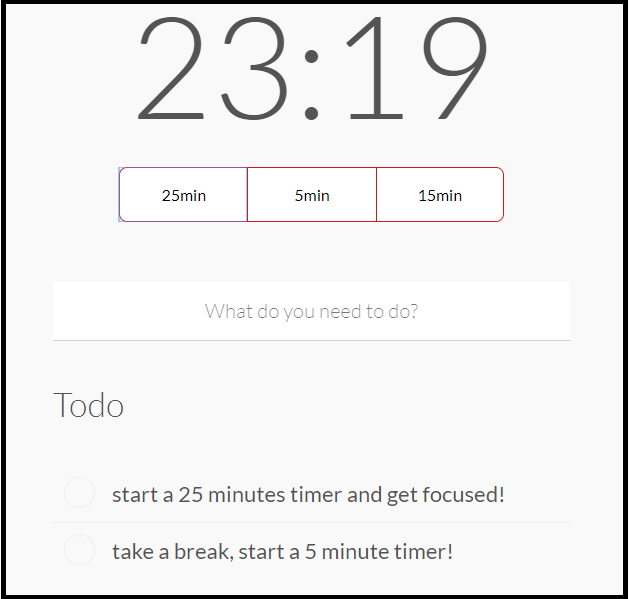
    A break as short as 5 minutes is enough to keep your mind sharp and wards off fatigue. I recommend you to use the Pomodoro Time Tracker. It is a great tool to help you take breaks at set intervals. Simply start the 25-minute timer, and follow the prompts.

    4.  Reward yourself

    It’s important to acknowledge and reward yourself for achieving even the small tasks. It creates a sense of motivation and releases those feel-good, productive emotions that spur you on to achieve even more.

    Make your reward proportional to the task you completed so getting a bite-sized task done gets you a cup of your favourite coffee or snack. Then plan a weekend away or fun activity for the bigger stuff.

    Personally I try to make staying focus more fun by using the app Forest. It turns productivity into a game. In the game, you can plant a virtual tree at the beginning of your work time. If you maintain focus for the duration of the timer, you’ll grow a tree to add to your forest. It’s rewarding when you can eventually grow a forest.

    5. Keep track of your time in a smart way

    If you want to prevent the bad habit of procrastination from coming back, keep track of the time you spend every day.

    By having a clear idea of where you spend your time, you can always review your productivity and know which areas to improve.

    It’s not easy to keep track of every minute you spend throughout the day so I recommend you to use the app Rescue Time.

    It gets you a categorized breakdown of how you spend your time and helps you to find out how much time you’re really on-task. You can even label activities as productive and non-productive so as to block your biggest distractions.

    Procrastination exists for many reasons and only you know for yourselve what these triggers are. Understanding the source of your avoidance tendencies is important in moving them out of the way and help you start the productivity momentum.

    Reference

    function footnote_expand_reference_container() { jQuery(“#footnote_references_container”).show(); jQuery(“#footnote_reference_container_collapse_button”).text(“-“); } function footnote_collapse_reference_container() { jQuery(“#footnote_references_container”).hide(); jQuery(“#footnote_reference_container_collapse_button”).text(“+”); } function footnote_expand_collapse_reference_container() { if (jQuery(“#footnote_references_container”).is(“:hidden”)) { footnote_expand_reference_container(); } else { footnote_collapse_reference_container(); } } function footnote_moveToAnchor(p_str_TargetID) { footnote_expand_reference_container(); var l_obj_Target = jQuery(“#” + p_str_TargetID); if(l_obj_Target.length) { jQuery(‘html, body’).animate({ scrollTop: l_obj_Target.offset().top – window.innerHeight/2 }, 1000); } }

    The post Procrastination – A Step-By-Step Guide to Stop Procrastinating appeared first on Lifehack.
    Lifehack